
(9 May 2012, Taipei) A signing ceremony was held today in Indonesian Institute of Sciences (LIPI) for the joint feasibility study of the Economic Cooperation Agreement (ECA) between Taiwan and Indonesia, witnessed by Mr. Andrew Hsia, the Representative of Taipei Economic and Trade Office (TETO) in Jakarta and Prof. Dr. Syamsuddin Haris, Head of Research Centre for Politics, LIPI. This joint feasibility study is the second-phase collaborative research project between Research Centre of Politics and Economics (LIPI) and Taiwan WTO Center, Chung-Hua Institution for Economic Research (CIER) following the joint study of ‘Dynamics and current status of Indonesia-Taiwan relations’ in 2010-2011. In the concluding part of the joint study, a comprehensive ECA feasibility study was proposed to contribute to the understanding for economic benefits between Indonesia and Taiwan. This second-phase ECA feasibility study will end by 2012.
Due to the complementary nature of endowments between Indonesia and Taiwan,bilateral trade and investments have been intensified recently. The previous joint study carried out by Taiwanese and Indonesian research teams focused on the bilateral relations and dynamics, exploring the portunities particularly in the fields of SMEs, automobiles, lectronics and agricultural sectors. Their findings show that Indonesia and Taiwan will share the potential benefits, shall an ECA may strengthen the bilateral cooperation and boost an overall economic integration. It is thereby desirable for both governments to initiate an ECA asibility study to examine these effects.
Economic integration is in conformity of the mission of WTO – to promote trade iberalization. Empirical evidence demonstrates the economies will extend the industrial division, enlarge the economic scale and eventually attract investments by deepening economic integration. In particular, greater and more substantial economic benefits will be expected for the economies with highly-complementary endowments. It is essential that both quantitative simulations and qualitative study in major trade-related issues will be carried out in this ECA feasibility study. On the one hand, the modeling will aim to assess the prospective macro-economic impacts for an ECA. Some salient policy areas and issues will be closely examined and analyzed, including customs cooperation, trade facilitation, sanitary and phytosanitary measures, technical barriers to trade measures, capacity building, education and migrant workers, on the other.
Consultations with the public sector, business communities and academic scholars will be held in Indonesia and Taiwan, when the Indonesia-Taiwan ECA feasibility study is conducted. By the end of this study, the ECA feasibility report will be submitted to the policy makers of Taiwanese and Indonesian governments for further use.
During the signing ceremony, Prof.Dr.Syamsuddin Haris of LIPI expressed that it is LIPI’s privilege of having the opportunity to cooperate with Taiwan’s think-tank again on this joint feasibility study of the ECA between Taiwan and Indonesia. Representative Andrew Hsia of TETO emphasized that policy recommendations made by both institutions will urge the Indonesia and Taiwan governments to sign an ECA, which will benefit and promote the economic relations between both sides.
As many as 30 people from various research institutions, industries, and the media were also present to witness the ceremony.
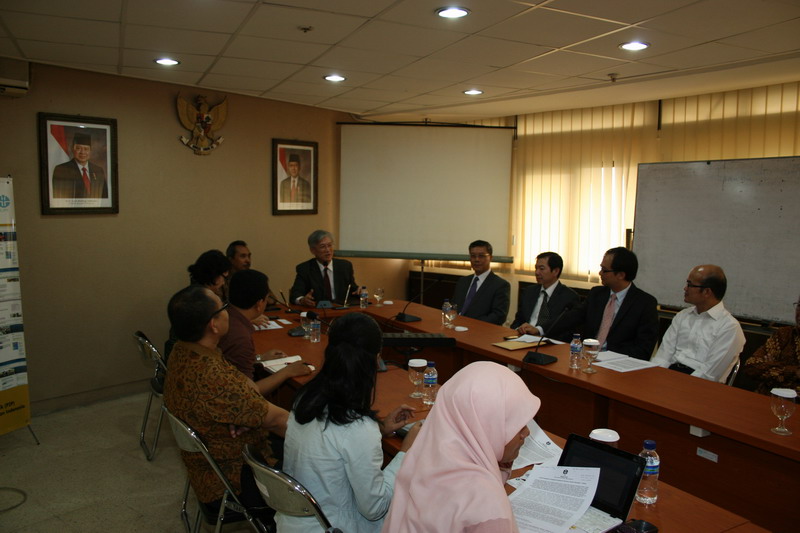
Photo 1 TETO Representative, Andrew Hsia, delivered a speech in the signing ceremony
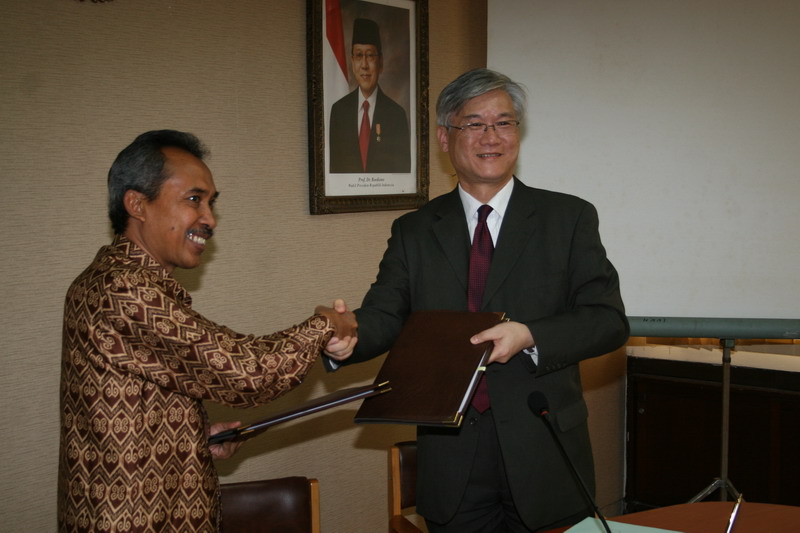
Photo 2 Representative (TETO), Andrew Hsia on the right, and Head of Research Centre of Politics (LIPI) Prof. Dr. Syamsuddin Haris on the left